Streamlining your business operations is crucial for success, especially when it comes to managing asset transactions. A well-designed equipment sales order form template serves as the backbone for efficient and legally sound sales processes. This essential document not only formalizes agreements but also ensures clarity for both the buyer and seller, preventing misunderstandings and disputes down the line.
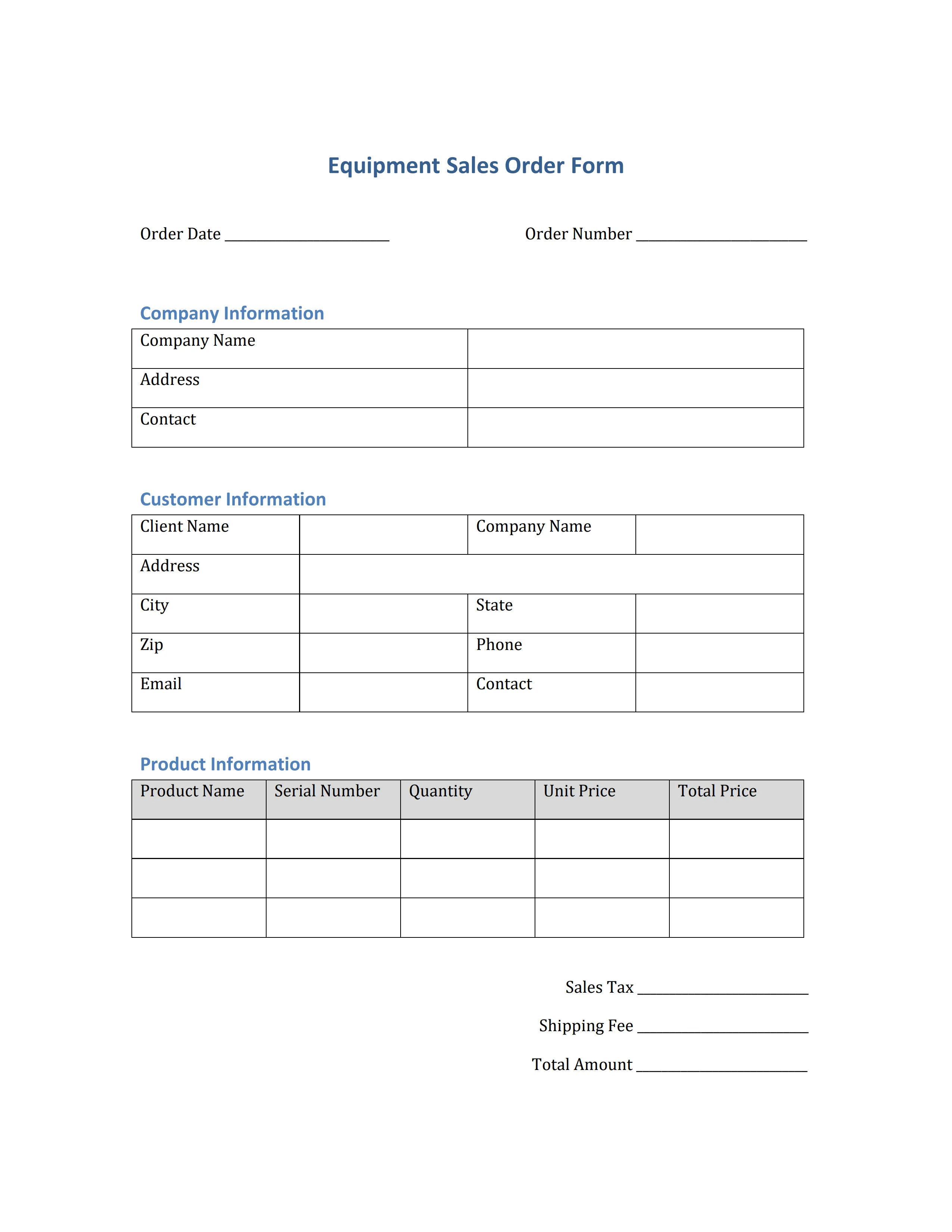
Understanding the nuances of professional documentation is vital for any business dealing with equipment sales, from heavy machinery to specialized tools. This article will delve into why a robust template is indispensable, highlight the key elements it should contain, and show you how to leverage an effective equipment sales order form template to enhance your transactional workflows and protect your interests.
Why a Standardized Equipment Sales Order Form Streamlines Business Operations
Adopting a standardized approach to your sales documentation can significantly improve operational efficiency. An equipment sales order form template ensures consistency across all transactions, reducing the time spent drafting individual agreements from scratch. This consistency helps to minimize errors and omissions, which can be costly in the long run.
Having a uniform sales agreement also professionalizes your business image. It demonstrates to clients that you operate with precision and attention to detail, fostering trust and confidence. Standardized forms make it easier for your sales team to process orders, track inventory, and manage client expectations effectively.
Furthermore, a well-structured template provides a clear audit trail for every equipment sale. This is invaluable for accounting, inventory management, and legal purposes. In the event of a dispute or query, having comprehensive, consistent documentation can save considerable time and resources, protecting your business assets and reputation.
Key Components of an Effective Equipment Sales Order Form
An effective equipment sales order form template must capture all critical information to ensure a smooth and legally compliant transaction. This includes details about both parties, the equipment being sold, payment terms, and delivery specifics. Overlooking any of these elements can lead to complications later.
The form should clearly identify the seller and buyer, including their full legal names, addresses, and contact information. Accurate identification prevents mix-ups and is essential for legal enforceability. This section sets the stage for the entire contractual agreement.
Detailed descriptions of the equipment being purchased are paramount. This involves listing the item’s make, model, serial number, condition (new, used, refurbished), and any included accessories. Ambiguity here can lead to disputes regarding what exactly was agreed upon.
Payment terms, including the total purchase price, any deposit required, the payment schedule, and acceptable payment methods, must be explicitly stated. It’s also wise to include clauses for late payments or default. Additionally, specify delivery or pickup details, including dates, locations, and who is responsible for shipping costs and insurance.
Here is a sample structure for an equipment sales order form template:
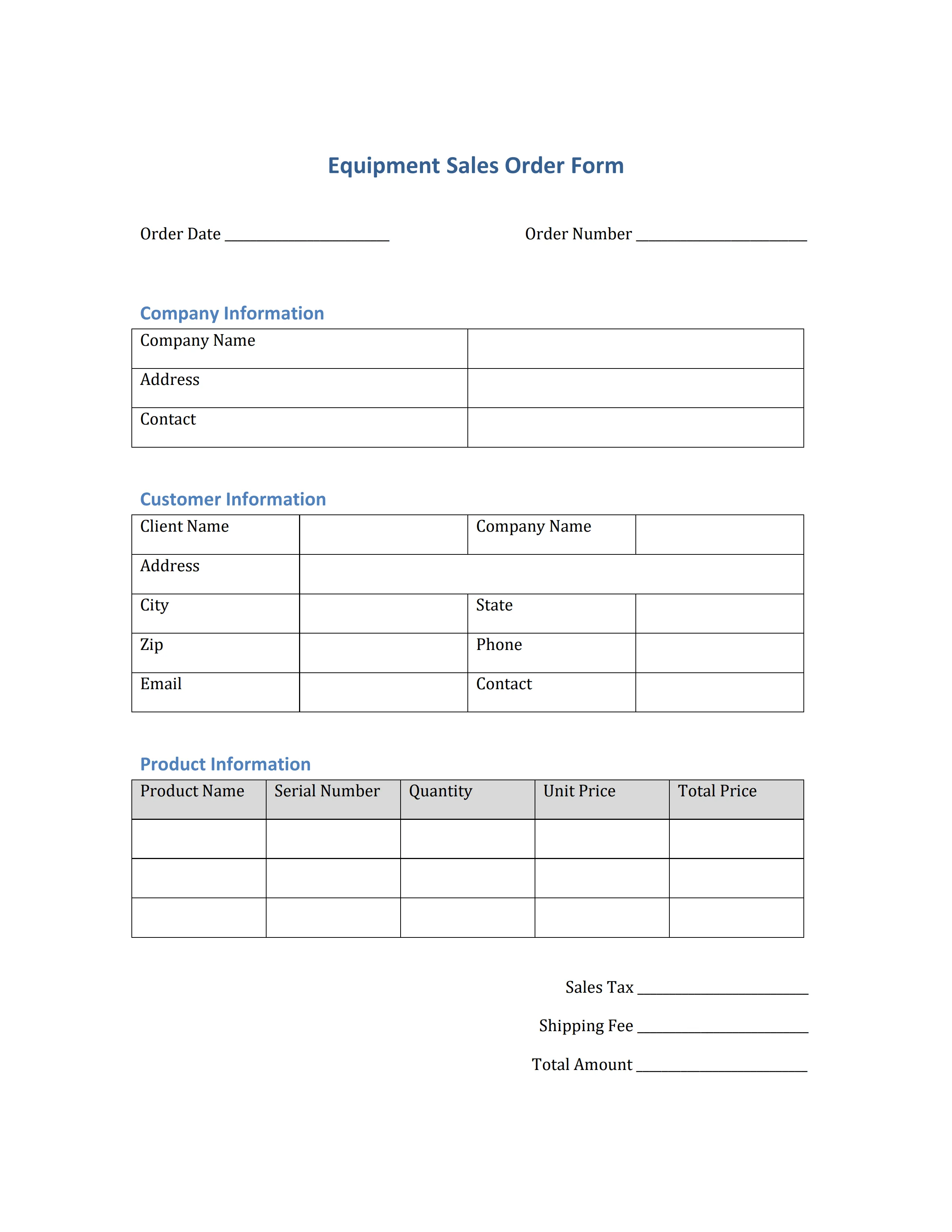
| Equipment Sales Order Form | |
|---|---|
| Order Date: | [DD/MM/YYYY] |
| Seller Information: | |
| Company Name: | [Seller Company Name] |
| Address: | [Seller Address] |
| Contact Person: | [Seller Contact Name] |
| Phone: | [Seller Phone Number] |
| Email: | [Seller Email Address] |
| Buyer Information: | |
| Company Name: | [Buyer Company Name / Individual Name] |
| Address: | [Buyer Address] |
| Contact Person: | [Buyer Contact Name] |
| Phone: | [Buyer Phone Number] |
| Email: | [Buyer Email Address] |
| Equipment Details: | |
| Item #1: | [Equipment Name/Model], Serial #[XXXX], Condition: [New/Used] |
| Unit Price: | $[0.00] |
| Quantity: | [1] |
| Item #2: | [Equipment Name/Model], Serial #[XXXX], Condition: [New/Used] |
| Unit Price: | $[0.00] |
| Quantity: | [1] |
| Pricing Summary: | |
| Subtotal: | $[0.00] |
| Sales Tax ([X]%): | $[0.00] |
| Shipping/Handling: | $[0.00] |
| Total Amount Due: | $[0.00] |
| Payment Terms: | |
|
|
| Delivery/Pickup Details: | |
| Delivery/Pickup Date: | [DD/MM/YYYY] |
| Location: | [Delivery/Pickup Address] |
| Responsibility: | [e.g., Seller arranges shipping, Buyer to pick up] |
| Terms and Conditions: | |
| [Insert any warranties, return policies, liability disclaimers, or specific contractual agreements here. E.g., “All equipment sold ‘as is’ unless otherwise specified.”] | |
| Signatures: | |
| Seller Signature: _________________________ | Buyer Signature: _________________________ |
| Print Name: _________________________ | Print Name: _________________________ |
| Date: _________________________ | Date: _________________________ |
Customizing Your Equipment Sales Order for Optimal Performance
While a basic equipment sales order form template provides a strong foundation, customizing it to fit your specific business needs is essential. Every industry and business model has unique requirements that standard forms might not fully address. Tailoring your template ensures it aligns perfectly with your operational workflows and legal obligations.
Consider adding specific clauses related to your industry, such as warranty details for specialized machinery or clauses about software licenses embedded in the equipment. You might also want to include fields for tracking internal information, like sales representative IDs or commission structures. Customization prevents the need for addenda or separate agreements.
Regularly review and update your equipment sales order form template to reflect changes in regulations, business practices, or product offerings. This proactive approach ensures your documentation remains current, compliant, and continuously supports efficient business transactions. An outdated form can lead to legal vulnerabilities or operational inefficiencies.
A robust equipment sales order form template is more than just a piece of paper; it’s a critical tool for any business engaged in equipment transactions. It brings clarity, legal protection, and efficiency to your sales process, empowering both sellers and buyers with a clear record of agreement. Investing in a well-crafted template, whether you create one from scratch or adapt an existing solution, is a smart business decision that pays dividends in streamlined operations and reduced risk.
By leveraging an optimized sales order form, businesses can focus more on growth and client relationships, knowing their administrative backbone is solid. Take the next step to elevate your sales documentation today and secure your transactions with confidence.
